

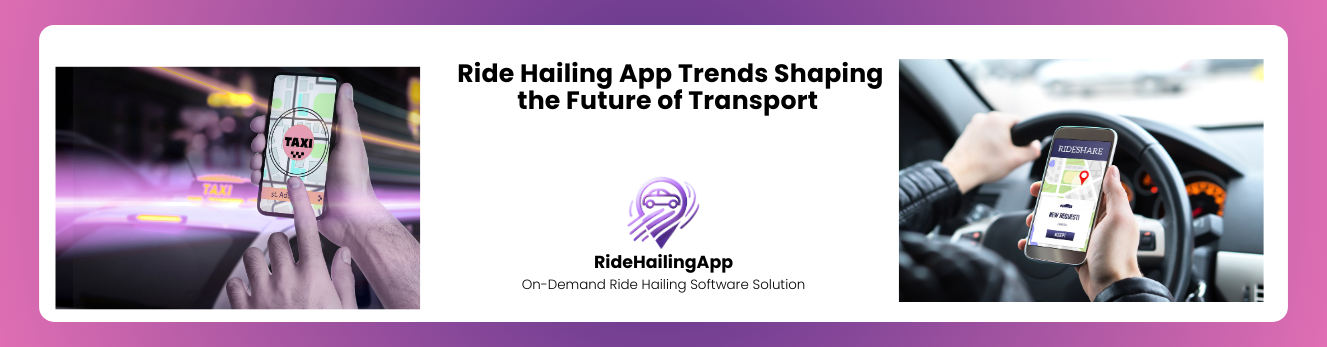
Ride hailing apps have transformed the way people move in cities, creating an on-demand transportation platform that seamlessly connects riders and drivers. What started as a simple taxi-booking mobile solution has now evolved into mobility-as-a-service (MaaS) apps, integrating micro-mobility options, public transport, and AI-driven features.
By 2024, the global trip volume reached 11.3 billion rides worldwide, with peak-day averages of 30–33 million trips per day, highlighting the massive adoption of urban mobility super-apps. The smartphone base of 4.6 billion users, coupled with urbanization, laid the foundation for rapid ride-hailing adoption.
Modern riders are increasingly selective, seeking the best ride hailing app experience. Features such as AI powered ride hailing apps, real-time tracking ride hailing apps, eco-friendly ride hailing apps, and wheelchair-accessible ride hailing apps have become differentiators, influencing adoption, loyalty, and growth.
Beyond convenience, these apps are reshaping urban transport, reducing car ownership, optimizing traffic flows, and integrating with corporate mobility solutions. They are no longer just apps—they are driver-passenger marketplaces and micro-mobility integrators powering the future of cities.
The ride-hailing app market has experienced explosive growth and shows no signs of slowing down:
2025 market value: USD 199.99 billion
2035 forecast: USD 497.15 billion
2026-35 CAGR: 9.53 %
2024 trip volume: 11.3 billion rides
This growth reflects not only consumer demand but also platform evolution. The emergence of AI powered ride hailing apps, real-time ride matching services, and dynamic pricing transport platforms is redefining profitability and operational efficiency. Investors, governments, and developers track these metrics closely to identify trends, forecast total addressable market (TAM), and evaluate ride hailing app comparison 2025 scenarios.
Emerging technologies—such as robotaxis, autonomous fleets, and predictive algorithms—ensure that ride hailing app user experiences are optimized for speed, reliability, and safety, positioning these platforms as essential urban infrastructure.
APAC leads global adoption, driven by urban population density and integration of micro-mobility options like electric scooters and bike taxis. Countries like Singapore and India are testing ride hailing apps with electric vehicle fleets and robotaxi pilots, while AI powered ride hailing apps optimize dynamic pricing and route allocation.
In the U.S. and Canada, adoption is high but growth is influenced by regulatory frameworks. AI powered ride hailing apps with features like predictive pricing and real-time tracking dominate urban areas, while ride hailing apps with carpool options reduce congestion and carbon emissions.
European countries focus on safety and compliance, including GDPR compliant ride hailing apps and insured platforms. Adoption is steady, with eco-friendly ride hailing apps gaining preference due to strict environmental regulations.
Middle East and Africa are emerging markets. Adoption is modest (4–6%), but governments encourage ride sharing software and mobility-as-a-service platforms to improve urban transport. Cash-based and offline ride hailing apps remain important in regions with limited smartphone penetration.
Millennials are the largest user segment, but ride hailing apps for wheelchair users in NYC and women-only ride hailing apps are capturing emerging demographics. Seniors are increasingly using on-demand transportation platforms, indicating the importance of wheelchair accessibility and SOS safety features.
Usage patterns vary: professionals take 8–12 trips/month, often during peak hours, while younger users rely on AI powered ride hailing apps for convenience and social mobility. Platforms with pet-friendly ride hailing apps and multilingual features attract niche segments, expanding adoption globally.
Global active drivers: 8.8 million
U.S. driver pool: 1.8–2.2 million (2024)
Utilisation: 30–40 % weekly
Driver shortage: onboarding slowed 7–10 % by new safety checks
Driver availability affects service reliability. Platforms rely on real-time ride matching services and AI powered ride hailing apps to optimize supply and reduce idle time. Retention incentives, training, and fair pay policies contribute to stronger driver-passenger marketplaces and healthier gig-economy ecosystems.
EVs in fleets: 350,000 worldwide (end-2024)
New EVs deployed 2024: 100,000+
14 major operators pledged >100k EVs 2023–26
Two-wheelers: 25–35 % of trips in SE Asia & India
Green mobility is central to eco-friendly ride hailing apps and carbon-neutral ride hailing apps. By integrating bike-taxi hailing apps, platforms not only reduce emissions but also address congestion in densely populated cities.
Charging infrastructure remains a bottleneck, highlighting the need for strategic partnerships with micro-mobility integrators and public transit systems. AI powered ride hailing apps predict charging demand to optimize fleet availability.
Multimodal bookings: 28 % of rides combine transit + micro-mobility
Robotaxi pilots: live in 5 cities; >100 trips/day
Taxi-integration: medallion utilization up 9–14 %
Pooled rides: 11–16 % of volume in metros
AI and predictive algorithms underpin modern ride hailing apps, enabling features like offline ride hailing apps, voice-activated ride hailing apps, and ride hailing app with predictive pricing. These innovations improve efficiency, reduce wait times, and increase revenue while enhancing user experience.
Top-2 platforms handled >8 billion rides (~70 %)
U.S. duopoly: 76 % vs 24 % market share
China domestic platforms: >4 billion rides
Airport segment: 6–8 %
Corporate mobility: 9–11 %
The market is dominated by top ride hailing apps that provide superior user experience, integrate AI, and comply with regulations. Smaller platforms compete via specialized features like EV fleets, cash payments, and multilingual support.
150+ jurisdictions with active regulations
12 U.S. states updated rules 2022–24
8 MEA countries introduced ride-hailing laws
Wheelchair-accessible requests: 6–9 %
Compliance is key for trust. Features like ride hailing app with SOS button, background check policy, and GDPR compliant ride hailing apps ensure passenger and driver safety. Insured ride hailing apps and dashboard monitoring for dash-cam-equipped vehicles further strengthen credibility.
Average take-rate: 20–27 %
Robotaxi cost: ≈$0.50/mile vs $1.20 human-driven
Premium tier revenue: 5–9 %
Innovative pricing models such as ride hailing app with upfront pricing, cheap ride hailing apps, and ride hailing app subscriptions attract cost-sensitive users while maintaining driver incentives. Promo codes, loyalty schemes, and zero-commission models further boost engagement.
Widening driver-supply deficit
Regulatory caps on commissions
Insurance inflation: +12 % YoY
EV charging gap: 1 charger per 18 EVs
Platform evaluation should include ride hailing app comparison 2025, safety, and operational scalability. White-label ride hailing apps can reduce risk by allowing flexible deployments with predictable costs.
Autonomous vehicles driving robotaxi ride hailing apps
Integration with e-scooters, bikes, and public transit (micro-mobility integrators)
Multilingual and AI-driven features in AI powered ride hailing apps
Blockchain-enabled fare systems for transparency
Urban mobility is evolving into super-app ecosystems, blending transport, payments, and sustainability. Features like ride hailing apps that integrate with public transit in London and ride hailing app for tourists in Europe exemplify this trend.
Ride-hailing apps are redefining urban transport. With 350,000 EVs deployed globally, 11.3 billion rides, and a CAGR of 9.53 %, the sector is growing rapidly. Modern platforms must combine data-driven insights, AI-powered features, regulatory compliance, and user-centric design to thrive.
From eco-friendly ride hailing apps to wheelchair-accessible and women-only ride hailing apps, technology, safety, and sustainability are shaping the next decade of mobility. For investors, developers, and city planners, understanding these trends is critical to harnessing the full potential of ride-hailing app ecosystems.
The best ride hailing app for daily commuters combines convenience, affordability, and safety. Key features include AI powered ride hailing app functionalities, real-time tracking ride hailing apps, ride hailing apps with upfront pricing, and eco-friendly ride hailing apps. Such apps reduce wait times, optimize routes, and offer subscription plans or promo codes for cost-effective commuting.
A ride hailing app with electric vehicle fleet minimizes carbon emissions and supports cities’ climate goals. EV fleets reduce fuel dependency, lower operational costs, and pair well with carbon-neutral ride hailing apps. Platforms can also integrate micro-mobility solutions like e-scooters and bike taxis to further enhance urban sustainability.
The safest ride hailing app for women combines background-checked drivers, SOS emergency buttons, and wheelchair-accessible ride hailing features. Platforms that prioritize safety and regulatory compliance, such as GDPR compliant ride hailing apps, also maintain insurance coverage and real-time ride monitoring to ensure peace of mind for all passengers.
Yes. A ride hailing app that integrates with public transit allows users to plan multimodal trips efficiently. Many modern platforms act as urban mobility super-apps, combining taxi services, buses, e-scooters, and micro-mobility options into a single experience, offering predictive pricing and real-time ride matching for convenience.
The cheapest ride hailing app usually provides upfront pricing, promotional codes, and subscription plans to reduce ride costs. Comparing ride hailing app reviews, analyzing fare structures, and checking for discounts can help daily commuters or tourists identify the most cost-effective platform for their needs.
Yes, the best ride hailing app for tourists in Europe or other regions typically includes multilingual support, offline ride hailing capabilities, and integration with local transport networks. Features like real-time tracking, cash or digital payments, and safe driver verification make it convenient for international travelers unfamiliar with local roads.
Need help?
Contact Us
© current_year Ride Hailing App. All Rights Reserved. | Developed by Zetaton